Education & Training
ISO 45001:2018-aligned learning
Incident Reporting & Accident Investigation
Investigate with evidence.
Act to prevent recurrence.
Learn to report incidents, preserve evidence, uncover underlying causes and verify corrective actions through practical, case-study-led training.
WORKPLACE CASE STUDIES
Your investigation pathway
A complete process. Not just a report.
Follow the investigation from the initial notification to evidence that corrective actions are working.
- 01ReportRecognise & escalate
- 02PreserveProtect relevant evidence
- 03InvestigateEstablish the facts
- 04AnalyseExamine the causes
- 05ActImplement better controls
- 06VerifyReview effectiveness
Why this course matters
Go beyond “what happened”.
A useful investigation does more than describe an injury or identify the last person involved. It examines the work, equipment, supervision and organisational conditions behind the event.
In this NISHE programme, you work with case information, photographs, witness accounts and reporting templates. Practise checking the evidence, testing possible causes and developing recommendations that address the findings.

Discuss the evidence. Challenge assumptions. Explain your findings.Illustrative group-work photograph · Unsplash; not a NISHE batch photograph.
Who should join?
Entry level: Foundation to intermediate. Basic workplace awareness is recommended; no previous investigation experience is required. A laptop or desktop is recommended for the online reporting exercises.
Practical learning outcomes
Skills you can bring to the next investigation.
Build a consistent approach—from deciding what to report to explaining why an action should work.
Report with clarity
Classify events, identify the reporting route and prepare a clear initial notification.
Plan the investigation
Define scope, roles and investigation depth based on actual and potential consequences.
Work with evidence
Preserve records, interview witnesses and separate facts from assumptions.
Analyse underlying causes
Use structured techniques to examine work arrangements, controls and organisational factors.
Build actionable CAPA
Link actions to findings and assign owners, deadlines and verification criteria.
Communicate & follow through
Present a management-ready report and check whether corrective actions are effective.
Eight-module syllabus
From first notification to final learning.
Open each module to explore the topics and practical output.
16 guided training hours
01Foundations & investigation planning1 hour · Module 01
Understand what an investigation is for, when to escalate an event and how to set an appropriate investigation scope.
- Incidents, accidents, near misses and dangerous occurrences.
- Reporting culture, worker participation and investigation responsibilities.
- Actual versus potential severity, team selection and investigation depth.
02Indian reporting requirements & ISO 450012 hours · Module 02
Build a method for checking which reporting duties apply to a particular establishment, event and jurisdiction.
- Internal reporting versus statutory notification: who acts, when and to whom.
- Applicable OSHWC framework and Central/State rules; Factories/BOCW legacy references where applicable.
- ISO 45001 Clause 10.2 alignment: incident investigation, corrective action and effectiveness review.
03Immediate response & scene preservation1.5 hours · Module 03
Prioritise assistance to affected people and control of continuing danger before collecting evidence.
- Initial escalation, emergency coordination and the investigator’s role.
- Controlled access, scene documentation and preservation of relevant evidence.
- Recording necessary changes made during rescue, emergency response or hazard control.
04Evidence collection & witness interviews2.5 hours · Module 04
Gather reliable information while respecting witnesses, confidentiality and the integrity of records.
- Photographs, sketches, permits, maintenance records, logs and digital evidence.
- Open questions, witness-interview practice and accurate statement recording.
- Evidence provenance, event timelines, conflicting accounts and information gaps.
05Root-cause analysis & barrier review3 hours · Module 05
Move beyond unsupported conclusions and examine the conditions that contributed to an event.
- Practical 5-Why and Ishikawa/Fishbone exercises using evidence-supported cause statements.
- Change analysis, immediate and underlying causes, and human/organisational factors.
- Introduction to SCAT and Bow-Tie/barrier thinking: missing, failed or ineffective controls.
06Corrective action & effectiveness checks2 hours · Module 06
Develop actions that address identified causes—not simply instructions to “be more careful”.
- Immediate correction versus corrective action; selecting controls and setting priorities.
- Action owners, realistic deadlines, resources and implementation evidence.
- Completion checks, effectiveness criteria and application to similar activities or sites.
07Investigation reports & communication1.5 hours · Module 07
Turn investigation work into a clear report and a practical learning message for the organisation.
- Executive summaries, event sequences, findings and supporting appendices.
- Evidence-based recommendations, limitations and unresolved questions.
- Anonymised safety alerts, respectful communication and authorised external communications.
08Integrated case study & final assessment2.5 hours · Module 08
Bring the complete process together in a simulated construction, industrial or maintenance investigation.
- Case briefing, investigation planning and review of supplied evidence.
- Report workshop, cause analysis and a justified corrective-action plan.
- Knowledge assessment, short presentation and trainer feedback.
Suggested delivery: two full training days or scheduled sessions. Allow approximately 2–4 additional hours to finalise the investigation assignment. Batch dates, LMS access and recording arrangements are confirmed before enrolment.
Build an evidence-led analysis toolkit.
Use complementary methods to test causes and understand the controls that should have prevented or reduced the event.
Practical emphasis: 5-Why, Fishbone and evidence-linked analysis. SCAT and Bow-Tie are introduced within the course’s foundation-to-intermediate scope.
Your investigation toolkit
Less time formatting. More time investigating.
Editable course resources support a consistent process. Word and Excel formats are used where appropriate, with PDF reference copies.
Reporting & notification
Incident/near-miss form, initial notification checklist and reporting-obligations matrix.
Planning & preservation
Investigation scope sheet, team responsibilities and scene-preservation checklist.
Evidence & interviews
Evidence log, photograph register, witness record, scene sketch and event timeline.
Cause-analysis worksheets
5-Why, Fishbone, change-analysis and barrier-review working sheets.
Action tracking
CAPA tracker with action owners, target dates, closure evidence and effectiveness review.
Reports & lessons learned
Investigation report structure, follow-up checklist and lessons-learned communication.
Assessment & certification
Demonstrate what you can do.
Assessment combines knowledge, practical documentation and a complete investigation report.
test
assignments
presentation
Your report is assessed for its use of evidence, event sequence, cause analysis, suitability of corrective actions and proposed effectiveness checks.
Train in the format that fits
Individual learning. Team capability.
Combine trainer guidance with evidence exercises, witness-interview role play and report-development activities.
Join from your location.
Scheduled interactive sessions, case discussions and practical exercises. The batch offer confirms LMS access and recording availability.
Learn face to face.
Group investigations, interview practice, worksheet exercises and trainer feedback in a classroom workshop.
Work with your context.
Discuss an agreed programme using your industry focus, procedures, approved templates and anonymised case information.
Build a consistent investigation approach across your team.
Share your industry, location, participant numbers and preferred dates for a tailored proposal.
Before you enrol
Frequently asked questions.
Is this course suitable for beginners?
Yes. The course starts with reporting and investigation fundamentals. A basic understanding of workplace activities is recommended; prior investigation experience is not required.
Does it cover Indian statutory reporting?
Yes. Exercises address how to identify applicable obligations, authorities, forms and timelines under the relevant Indian framework. Requirements are checked against the workplace and jurisdiction rather than treating one deadline or form as universal.
Will I practise every named investigation method?
You will practise 5-Why, Fishbone and evidence-linked cause analysis, and explore change and barrier analysis. SCAT and Bow-Tie are introduced at foundation-to-intermediate level; this is not an advanced qualification in every technique.
Are the templates included?
Yes. The course package includes the editable investigation resources specified in the batch offer, with Word, Excel and PDF formats used where appropriate. Proprietary SCAT charts/software and the full ISO standard are not included unless expressly stated.
What are the pass requirements?
Achieve at least 70% overall and complete the required practical assignments and final investigation report. Assessment weighting is 25% knowledge test, 25% practical assignments and 50% final report and presentation.
Is the certificate issued or approved by ISO?
No. The certificate is issued by NISHE. ISO 45001 alignment describes the learning content, not approval or certification by ISO. This is not a statutory investigator licence or a Lead Auditor qualification.
Can I use a case from my own workplace?
A workplace case may be used with trainer approval and employer permission. Remove or appropriately protect personal, medical, commercially sensitive and other confidential information.
Are Hindi or Urdu explanations available?
The primary course language is English, with Hindi/Urdu explanation support. Confirm any translated assessment or resource requirements before enrolling.
Will I get LMS access and recordings?
The batch offer specifies the LMS access period and whether recordings are available. Confirm these arrangements before enrolment; guided training hours and the LMS access period are not the same thing.
Can our organisation book a private batch?
Yes. Corporate delivery can be discussed around your industry, participant group, location, procedures, approved templates and anonymised case information. Contact NISHE for an agreed scope and quotation.
Investigate thoroughly.
Learn honestly. Act effectively.
Ask about the next batch, current fee, delivery options or a private programme for your team. Confirm the fee and applicable taxes before payment.
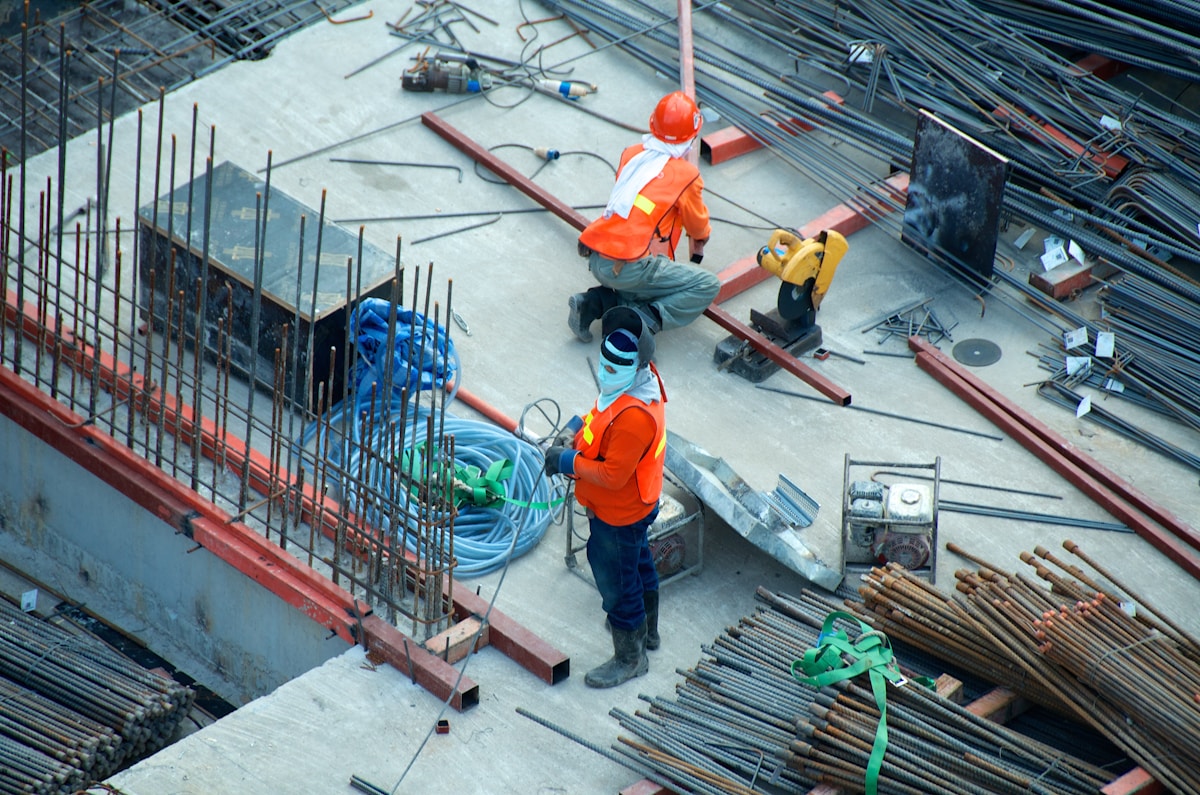
Photographs: illustrative images from Unsplash. They do not depict a NISHE course, an actual investigated incident or an endorsement.
Course Features
- Lecture 0
- Quiz 1
- Duration 10 weeks
- Skill level All levels
- Language English
- Students 392
- Certificate Yes
- Assessments Self
- 10 Sections
- 0 Lessons
- 10 Weeks
- Module 01 — Foundations and Investigation Planning Duration: 60 minutesModule learning outcomes By the end of this module, participants should be able to classify sample workplace events, explain the purpose of investigation, and prepare an initial investigation plan appropriate to the event’s actual and potential consequences. Lesson 1.1 — Incident terminology and the purpose of investigation | 20 minutes Introduce incidents, accidents, near misses, dangerous occurrences, occupational ill health and property-damage events. Distinguish routine organisational classifications from terms that have a specific statutory meaning. Discuss the purpose of investigation: understanding what happened, identifying failed controls, learning lessons and preventing recurrence. Include a short, ungraded entry knowledge check. Lesson 1.2 — Reporting culture, responsibilities and worker participation | 20 minutes Examine reasons people may hesitate to report events, including fear of blame, unclear reporting routes and lack of feedback. Discuss the roles of workers, supervisors, managers, HSE personnel and contractors. Introduce respectful communication, impartiality, confidentiality and the need to keep facts separate from assumptions. Lesson 1.3 — Investigation priority, scope and team selection | 20 minutes Compare actual consequences with credible potential consequences. Practise selecting investigation depth, defining boundaries, identifying required expertise and assigning responsibilities. Introduce a simple investigation plan covering scope, team, evidence needs, immediate priorities and expected outputs. Practical activity: Classify a set of short workplace scenarios, select investigation priorities, and prepare a one-page plan for the main course case. Evidence of achievement: The learner explains the classification and investigation depth rather than relying only on whether someone was injured. Study-material visuals: Event-classification chart, investigation pathway diagram and actual-versus-potential consequence comparison.0
- Module 02 — Indian Reporting Requirements and ISO 45001 Duration: 120 minutesModule learning outcomes Participants should be able to distinguish internal reporting from statutory notification, identify the sources needed to establish applicable obligations, and explain how the investigation process supports the course’s ISO 45001 alignment. Important legal-content update The study material should include the Occupational Safety, Health and Working Conditions (Central) Rules, 2026, notified through G.S.R. 345(E), dated 8 May 2026. These are final rules, not merely a draft. The teaching approach must still establish the relevant jurisdiction and applicable requirements before selecting a reporting form or deadline. Labour Ministry Lesson 2.1 — Identifying the applicable legal framework | 35 minutes Introduce the OSHWC framework and the process for checking the appropriate government, establishment type, jurisdiction, rules and notifications. Use Factories/BOCW legacy references only with their status and relevance clearly explained. Teach learners to record the source and verification date rather than copy an old reporting table without checking it. Lesson 2.2 — Internal reporting and statutory notification | 45 minutes Compare initial internal notification, prescribed statutory reporting and the later investigation report. Introduce the 2026 Central Rules’ provisions on accidents, dangerous occurrences and disease notification, where applicable. Practise identifying the responsible person, authority, trigger, form, deadline, submission method and acknowledgement record. Labour Ministry Lesson 2.3 — ISO 45001 alignment and documented follow-through | 40 minutes Use the Clause 10.2 focus specified in your course description to connect incident response, cause evaluation, corrective action and effectiveness review. Include worker participation, relevant records, review of similar risks and updates to workplace controls. Explain the difference between course-content alignment and certification. The reference register should identify ISO 45001:2018 and its 2024 amendment, rather than silently substituting a draft revision for the published standard. ISO Practical activity: Using supplied official extracts and a defined workplace scenario, complete a reporting-obligations matrix and identify the investigation records to retain. Evidence of achievement: Every stated reporting obligation has an identifiable source; unresolved applicability questions are explicitly flagged. Study-material visuals: Reporting-route flowchart, completed sample reporting matrix and an incident-to-corrective-action process diagram.0
- Module 03 — Immediate Response and Scene Preservation Duration: 90 minutesModule learning outcomes Participants should be able to identify the investigator’s immediate priorities, prepare an initial notification, and document how a scene and relevant evidence have been protected. Lesson 3.1 — Immediate priorities and emergency coordination | 30 minutes Teach the sequence of protecting people, obtaining competent emergency assistance, addressing continuing danger and coordinating with authorised responders. Clarify the investigator’s role and limitations. The exercise must not encourage learners to enter unsafe areas, undertake unauthorised rescue or interfere with emergency operations. Lesson 3.2 — Securing the scene and protecting evidence | 30 minutes Cover controlled access, scene boundaries, access records and the protection of equipment, documents and relevant digital records. Discuss who may authorise access and changes. Practise identifying evidence that could be lost, moved, overwritten, contaminated or damaged. Lesson 3.3 — Initial notification and scene-change records | 30 minutes Prepare a factual first notification that separates confirmed information from information awaiting verification. Record changes made during rescue, emergency response or hazard control: what changed, why, when, by whom and what information remains available. Practical activity: Work through a simulated scene using photographs and a site sketch. Complete the initial notification, access record and scene-change log. Evidence of achievement: The response prioritises people and hazard control while maintaining a clear record of necessary scene changes. Study-material visuals: Annotated scene plan, access-control illustration and an example of a properly recorded scene change. Scope boundary: This module is not first-aid, rescue, electrical-isolation or emergency-response certification.0
- Module 04 — Evidence Collection and Witness Interviews Duration: 150 minutesModule learning outcomes Participants should be able to collect and organise case evidence, conduct a respectful witness interview, and construct a timeline that distinguishes established facts from uncertainties. Lesson 4.1 — Evidence sources, recording and integrity | 60 minutes Examine physical, documentary, photographic and digital evidence. Use examples such as permits, inspection reports, maintenance records, training records, operating logs and CCTV information. Assign evidence identifiers and record source, collection details, storage location and handling. Keep original files separate from annotated working copies. Identify when specialist technical assistance is needed. Lesson 4.2 — Planning and conducting witness interviews | 60 minutes Practise interview preparation, open questions, active listening, clarification and accurate recording. Include how to distinguish direct observation from information heard from others. Address language support, distress, conflicting accounts and confidentiality limits. Avoid leading questions and pressure to agree with a preferred explanation. Lesson 4.3 — Event timelines, corroboration and information gaps | 30 minutes Arrange events before, during and after the incident. Compare witness accounts with available records. Identify uncertain times, contradictory information and missing evidence. Introduce a simple working table: finding, supporting evidence, confidence or limitation, and further enquiry required. Practical activity: Conduct a paired interview and produce an evidence register, witness record, event timeline and information-gap list. Evidence of achievement: Important timeline entries can be traced to evidence; unknown information is not invented. Study-material visuals: Evidence-source map, sample photo register, interview-question comparison and an evidence-linked timeline.0
- Module 05 — Root-Cause Analysis and Barrier Review Duration: 180 minutes0
- Module 06 — Corrective Actions and Effectiveness Checks Duration: 120 minutesModule learning outcomes Participants should be able to convert findings into prioritised actions, assign responsibilities and define how implementation and effectiveness will be demonstrated. Lesson 6.1 — Correction, corrective action and wider prevention | 30 minutes Distinguish making the immediate situation safe from addressing the conditions that allowed the event. Practise linking each proposed action to a specific finding. Extend the review to similar equipment, tasks, contractors or locations where the same weakness may exist. Lesson 6.2 — Selecting controls and developing the action plan | 45 minutes Apply the hierarchy of controls when considering options. Compare changes to equipment and work design with procedures, supervision, training and personal protective equipment. Consider feasibility, resources, interim controls and any new risks created by the proposed change. Assign an accountable owner, target date and priority. Lesson 6.3 — Implementation evidence and effectiveness review | 45 minutes Separate “action completed” from “action demonstrated to work”. Define completion evidence, review dates, responsible reviewers and suitable checks. Practise using inspections, functional checks, worker feedback and follow-up observations to evaluate actions. Practical activity: Develop a tracker containing at least five justified actions for the course case, including implementation evidence and effectiveness criteria. Evidence of achievement: Actions address the identified causes and specify how their effectiveness will be checked. Study-material visuals: Hierarchy-of-controls diagram, weak-versus-strong action comparison and a completed tracker.0
- Module 07 — Investigation Reports and Communication Duration: 90 minutesModule learning outcomes Participants should be able to organise findings into a readable report, communicate lessons appropriately, and explain how the investigation will be followed through. Lesson 7.1 — Building the investigation report | 40 minutes Develop the report’s scope, executive summary, factual account, event sequence, evidence references, analysis, findings and recommendations. Include limitations, unresolved questions and appendices. Practise checking consistency between the evidence, causal findings and proposed actions. Lesson 7.2 — Management briefings and lessons learned | 25 minutes Turn the report into a concise management briefing and an anonymised safety alert. Use clear language, explain the required action and identify the affected audience. Distinguish internal learning communications from external communications requiring organisational authorisation. Lesson 7.3 — Follow-up, accountability and organisational learning | 25 minutes Plan how outstanding actions will be reviewed and escalated. Identify related risk assessments, procedures, training or maintenance arrangements that may require revision. Examine a small simulated action dataset to identify overdue work, repeat findings and incomplete effectiveness reviews. Practical activity: Prepare an executive summary, one-page safety alert and follow-up schedule. Evidence of achievement: The communication explains what was learned and what must change without unsupported blame or unnecessary personal information. Study-material visuals: Report-layout example, annotated executive summary, safety-alert example and a clearly labelled simulated follow-up chart.0
- Module 08 — Integrated Case Study and Final Assessment Duration: 150 minutesModule learning outcomes Participants should be able to assemble a complete investigation submission, justify their conclusions and explain the proposed corrective actions. Lesson 8.1 — Integrated investigation workshop | 75 minutes Bring together the work completed in Modules 01–07. Review the evidence, resolve avoidable inconsistencies, refine the causal analysis and complete the action plan. Use a submission checklist to confirm that findings are evidence-linked and limitations are acknowledged. Lesson 8.2 — Knowledge assessment | 30 minutes Complete the proposed 25-mark assessment covering reporting, planning, scene preservation, evidence, analysis, corrective action and communication. A suitable structure is 20 multiple-choice questions plus one five-mark scenario question. Lesson 8.3 — Presentation, questions and trainer feedback | 45 minutes Present the event sequence, principal findings, proposed controls and effectiveness checks. Use small-group presentations with individual contribution checks so the session remains workable. Each participant should submit an individual investigation report. Practical output: The final report, supporting investigation documents, action plan and presentation. Independent completion: Allow approximately 2–4 additional hours to finalise the individual submission. Presentation feedback may inform revisions before the published submission deadline. Study-material visuals: Submission checklist, report-quality rubric and presentation structure.0
- Incident reporting & accident InvestigationExam0
- EXAM1