Fire and Life Safety Training – Course Overview
Fire and Life Safety Training by NISHE – National Institute of Safety Health and Environment helps your team prevent fires, protect lives and ensure safe, compliant workplaces across offices, malls, construction sites and residential buildings.
- Duration: Customisable half-day to 1-day workshop
- Mode: On-site / Online (live instructor-led)
- Level: Supervisors, engineers, wardens & ERT members
- Location: PAN India & online worldwide
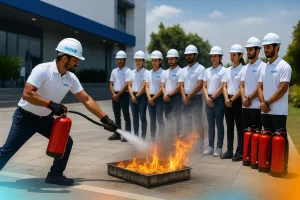
Practical Fire and Life Safety Training with real case studies and demonstrations.
Why Fire and Life Safety Training is Essential
Every year, workplaces in India experience serious fire incidents in offices, shopping malls, construction projects and residential towers. Most of these fires are preventable.
This Fire and Life Safety Training builds awareness about real incidents, their human and financial impact, and the simple actions that can stop a small spark from becoming a major disaster.
Participants see how poor housekeeping, unsafe electrical work, blocked exits and lack of drills can turn a routine day into an emergency. The course also highlights how good leadership, trained wardens and working fire systems save lives and protect business continuity.
Key Learning Outcomes
- Identify common fire and life safety hazards in your workplace.
- Understand fire science, fire classes and modes of fire spread.
- Plan safe evacuation using proper means of escape and assembly points.
- Use portable fire extinguishers safely and confidently.
- Understand legal and insurance implications of non-compliance.
Who Should Attend?
- Supervisors, engineers and facility managers
- Fire wardens, floor marshals and ERT members
- Security staff and maintenance technicians
- HR / admin personnel responsible for safety
- Any employee who wants to improve fire and life safety awareness
Fire and Life Safety Training – Detailed Modules
1. Introduction to Fire and Life Safety
- Objectives of the training and expected outcomes.
- Recent real fire incidents from offices, malls, construction and residential buildings.
- Impact on people, property, operations and business reputation.
2. Basics of Fire Science
- Fire triangle and fire tetrahedron – how fires start and continue to burn.
- Classes of fire (A, B, C, D, F/K) with simple workplace examples.
- Stages of fire growth and common modes of fire and smoke spread.
3. Fire Hazards and Prevention
- Poor housekeeping, waste and combustible storage practices.
- Electrical hazards: loose wiring, overloading, temporary joints and unsafe repairs.
- Hot work, smoking areas, LPG and fuel handling controls.
- Comparison of good vs. poor practices using photos and simple checklists.
4. Life Safety and Means of Escape
- Components of means of egress – exit doors, corridors, staircases and refuge areas.
- Assembly points, head count, roll call and communication.
- Common violations: locked exits, blocked staircases, storage on escape routes.
- Do’s and Don’ts for safe, calm and quick evacuation.
5. Legal & Regulatory Requirements (India)
- Employer duties for fire and life safety – overview of legal expectations.
- Reference to National Building Code (NBC) Part 4 – Fire and Life Safety.
- Links with Factories Act, BOCW Act and local fire service NoC conditions.
- Consequences of non-compliance: penalties, closure, legal action and reputational damage.
6. Fire Protection & Detection Systems
- Automatic fire alarm systems – detectors, manual call points and sounders.
- Active systems: sprinklers, hydrants, hose reels and fire pumps.
- Passive systems: fire-rated doors, walls, smoke barriers and compartmentation.
- Simple routine checks that supervisors and wardens can perform.
7. Portable Fire Extinguishers – Theory
- Types and colour codes – water, foam, CO2, DCP and clean agent.
- Matching extinguisher type with fire class and risk area.
- PASS method (Pull, Aim, Squeeze, Sweep) and safe distance.
- Limitations of extinguishers and when not to fight the fire.
8. Practical Demonstration & Hands-On Practice*
- Pre-use inspection: pressure gauge, pin, hose, nozzle and physical condition.
- Live or simulated fire demonstration, depending on site facilities.
- Individual practice using training extinguishers or simulator units.
*Practical session is arranged where local facilities, permissions and space are available.
9. Accident Data and Learning from Past Fires
- Typical causes of workplace fire incidents and near misses.
- Injury patterns – burns, smoke inhalation, panic and stampede injuries.
- Human, legal, financial and image costs of fire incidents.
- Using data and previous incidents to improve emergency plans.
10. Case Studies – Good and Poor Practices
- Case Study 1 – Poor Practice: blocked exits, no drills, non-functional alarms.
- Case Study 2 – Good Practice: effective systems, trained wardens and quick control.
- Discussion on what went wrong / what went right and how to apply lessons at participant sites.
11. Emergency Preparedness, Roles and Responsibilities
- Emergency Response Team structure – fire warden, floor warden, first aider.
- Raising alarm, calling the fire brigade and guiding people to assembly points.
- Special care for children, elderly, visitors and people with disabilities.
- Coordination with security, HR, maintenance and facility teams.
12. Mock Drill / Table-Top Exercise
- Walk-through of the evacuation plan, escape routes and refuge areas.
- Either a full evacuation drill or a table-top scenario-based exercise.
- Structured debrief – what went well, what needs improvement and action plan.
13. Communication, Reporting and Documentation
- Near-miss and incident reporting specific to fire and life safety.
- Fire logbook, extinguisher inspection records and drill reports.
- How proper records support legal compliance and insurance claims.
14. Assessment, Q&A and Feedback
- Short written / online quiz or practical evaluation to check understanding.
- Recap of the Top 10 Fire and Life Safety Do’s and Don’ts.
- Participant feedback and recommendation on refresher training frequency.
Certification and Related Training
On successful completion of the Fire and Life Safety Training, participants receive a NISHE certificate with a unique QR code for easy verification.
Many organisations combine this course with
Emergency Preparedness and Evacuation
and other
corporate HSE training programs
to build a complete safety culture.
For reference to national guidelines, participants are encouraged to consult the
National Building Code of India (NBC) and relevant BIS standards
.
Fire and Life Safety Training – Frequently Asked Questions (FAQs)
These FAQs answer common questions about our Fire and Life Safety Training and how it supports legal compliance and safer workplaces.
Course Features
- Lectures 3
- Quizzes 2
- Duration 25 hours
- Skill level All levels
- Language English
- Students 493
- Certificate Yes
- Assessments Self
- 4 Sections
- 3 Lessons
- Lifetime
- Module -1Fire Safety Management - Basics of Fire, Extinguishing & Evacuation, Identification of Fire Hazards, Fire Prevention & Protection.1
- Module -2Maintenance of fire systems i.e. Fire Extinguishers, Pumps, Hydrants, Fire Detectors & Alarm systems, Cost cutting, How to operate Equipment, Drawing & Flowcharts1
- Module -3Fire service at a glance, IS:2190, Emergency power Fire & Life Safety, SOP, & NBC - Part-IV (Fire & Life Safety).1
- Module -32